
Services
Child Psychotherapy
Growing up can feel confusing or overwhelming for children. When something is troubling them emotionally, it may show itself in different ways, through behaviour, worries, sleep difficulties, withdrawal, self-harm or feelings that seem too big to manage.
Child psychotherapy offers a safe and non-judgemental space where children can begin to explore these experiences. Sessions take place at the same time each week in the same room, which helps create a sense of reliability.
Children do not always find it easy to talk directly about what is troubling them, so therapy often uses play, drawing, stories, or other creative ways of communicating.
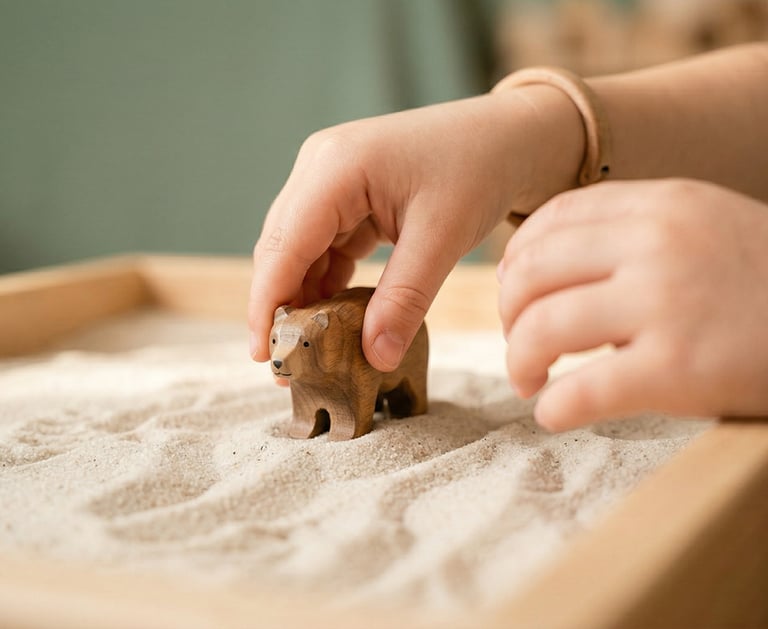
The room contains art materials, figurines, and puppets, and I also use a sand tray and clay tray for sand tray and clay field therapy. These tools can help address early developmental and sensory needs creatively, especially when words are not enough.
Many children move naturally between play and conversation. By paying close attention to what a child expresses in words and play, my role is to help make sense of feelings and experiences that may be hard to name or understand.
Over time, this process can help children develop a language for their emotions, think about their experiences more clearly, and find ways of managing feelings that may previously have felt overwhelming.
For younger children, working with parents or carers is an important part of the process. Alongside the child’s sessions, we meet periodically to reflect on what may be happening for your child and how best to support them. While psychotherapy is not primarily about behaviour strategies, gaining a deeper understanding of what a child may be communicating through their behaviour can help positive changes at home and at school.

Adolescent Psychotherapy
Adolescence is a period of enormous change. Young people are figuring out who they are, navigating friendships and relationships, and managing growing pressures from school and the wider world. At times this can feel overwhelming, and when it does, it may show up as anxiety, low mood, anger, withdrawal, self-harm, risk-taking, or a sense of feeling misunderstood or alone.
Adolescent psychotherapy offers a confidential and respectful space where your young person can talk and think about what is going on for them with someone outside their everyday world. For many teenagers, simply having a place where they can speak openly and be taken seriously can be very helpful. Most adolescents communicate mainly through conversation, though some may also find it helpful to draw, reflect quietly, or use small objects to help them think while they talk.
Young people often arrive unsure about what therapy will be like, and sometimes worried about what might be expected of them. Part of the early work is helping them understand that therapy is their space. They are not being judged, analysed, or sent somewhere because they need to be “fixed.” Instead, it is an opportunity for them to talk about the things they are finding difficult and to think about these experiences at their own pace.
Over time, the therapeutic relationship can help adolescents make sense of their feelings and experiences, both internally and in their relationships with others. This process can support the development of greater self-understanding, emotional resilience, and new ways of coping with challenges.
Parents or carers are still an important part of the process. Sessions themselves and what yourg people say and discuss will remain confidential. With the young person’s knowledge, we may have occasional meetings to reflect together on how things are going and how best to support them during this stage of development.


Parent–Infant Psychotherapy
Parent–infant psychotherapy focuses on the early relationship between a parent or carer and their baby, from pregnancy until around two years old. The arrival of a baby can be a joyful but also challenging time. Early difficulties such as feeding problems, sleep issues, excessive crying, anxiety or feelings of disconnection can be distressing for both parent and infant. You might find yourself feeling lost at a time when everyone else seems excited about the new arrival, and your feelings may not always match what you expected or what others assume this time should be like.
This work offers a gentle and supportive space to slow things down and think together about what life with your baby is feeling like for you, and about the relationship that is developing between you.
Babies are part of the sessions. Even very young babies communicate a great deal through their expressions, movements, sounds and rhythms, and having them in the room allows us to notice and think about these communications together. Crying, feeding or fussing is completely normal, in fact it can be an important part of understanding what your baby is experiencing and how you respond. Simply observing and reflecting on these moments can open up new ways of understanding both your baby and your own responses as a parent.
The aim is not to judge or assess parenting, but to create a space where parent and baby can both be held in mind. Our own experiences of being parented, how our needs were met, or not, often shape how we approach parenting ourselves : we might find ourselves wanting to do the same or something quite different. These experiences can have a powerful influence on how we feel in the early days after a baby is born.
As we begin to make sense of what is happening in the relationship, parents often feel more confident in reading their baby’s signals and responding in ways that feel more manageable. Strengthening this early connection can support both your baby’s emotional development and your own sense of confidence and wellbeing as a parent.
I offer parent–infant psychotherapy in a trainee capacity. I have completed the taught elements of my training and am finalising the remaining requirements. I have two years’ experience supporting families with babies and young children through various roles in the NHS and nationwide charity projects.


Reflective Parenting
In reflective parenting sessions, the focus is on supporting parents and carers to think more deeply about their child’s inner world. The starting point is always that you know your child best. However, when things feel difficult or confusing, it can be helpful to have a space to pause, reflect and gain a different perspective.
These sessions offer a non-judgemental environment to explore your child’s behaviour, emotions and relationships, and to consider how your past and present experiences may be influencing them. Reflective parenting can be helpful at any stage, even as children prepare to leave home. By strengthening your capacity to reflect on your child’s emotional world, you may feel more confident and attuned in responding to their needs, which in turn supports your child’s emotional development and wellbeing.
You don’t need your child to be in therapy with me for these sessions and you can attend online if that’s easier.


Address
Charing Cross Centre
19 St John Maddermarket
Norwich
NR2 1DN
Contact Details
Accredited By